Film1999
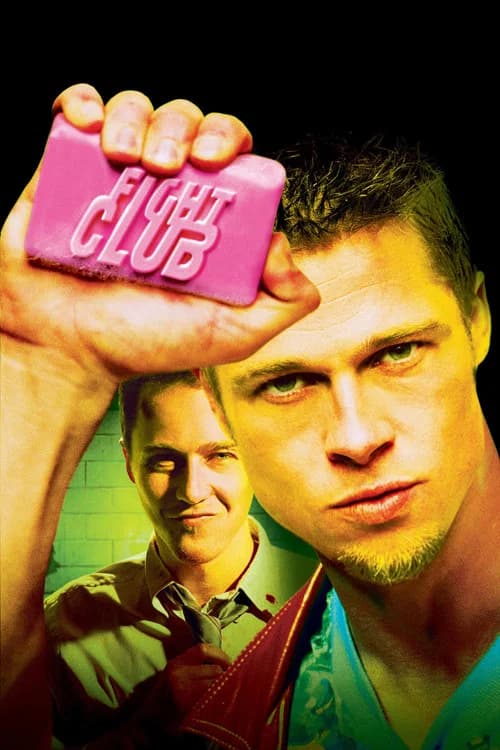
Fight Club
- IMDb
- 8.8/ 1033K votes
- Popularity on AkharinFilm
- 71of 2553 films
- Runtime
- 139 min
- Rating
- R
What's it about?
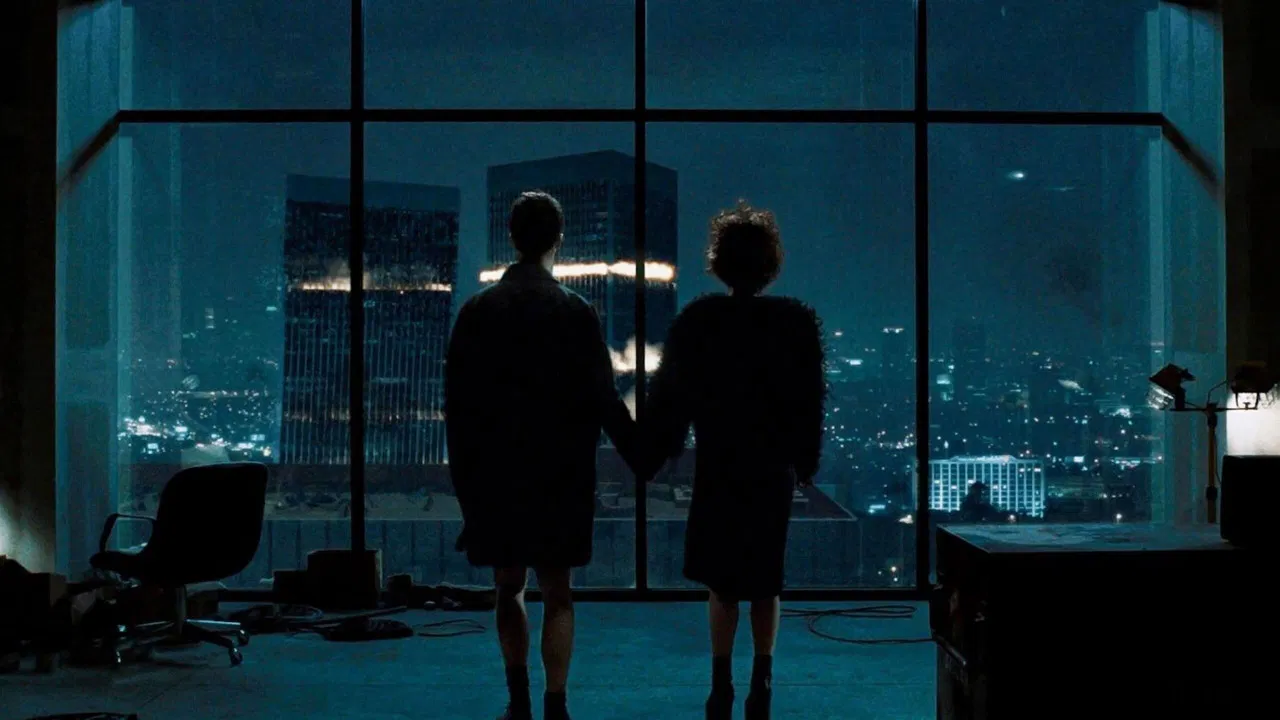
A ticking-time-bomb insomniac and a slippery soap salesman channel primal male aggression into a shocking new form of therapy. Their concept catches on, with underground "fight clubs" forming in every town, until an eccentric gets in the way and ignites an out-of-control spiral toward oblivion.
Worth watching?
AkharinFilm users
67%3 votes
Trailer
Plays from YouTube.
Details
- Country
- United StatesGermany
- Year
- 1999
- Language
- English
- Runtime
- 139 min
- IMDb score
- 8.8 / 10
- Votes (TMDB)
- 33K
- AkharinFilm users
- 67%
- Director
- David Fincher
- Writer
- Chuck PalahniukJim Uhls
- Rating
- R
- IMDb
- IMDb page
Cast
Where to watch
On Iranian services
These search each service for the title; they do not confirm it is available.


Related films
All films like this 8.6/10Se7en1995Crime، Mystery
 8.1/10Gone Girl2014Mystery، Thriller
 7.7/10The Social Network2010Drama
 8.0/10Amores Perros2000Drama، Thriller
 7.7/10Primal Fear1996Crime، Drama
 7.6/10The Game1997Drama، Thriller
 6.8/10Panic Room2002Crime، Drama
 8.0/10The Lives of Others2006Drama، Thriller
 7.4/10The Experiment2001Drama، Thriller
 7.5/10Lady Vengeance2005Drama، Thriller
 7.5/10The Wave2008Drama، Thriller
 7.4/10The Girl with the Dragon Tattoo2011Thriller، Crime
 8.3/10Requiem for a Dream2000Crime، Drama
 8.3/10Inglourious Basterds2009Drama، Thriller
Discussion
TMDB reviews
Reviews by TMDB users, as written.
Reviews from TMDB
- Goddard
Pretty awesome movie. It shows what one crazy person can convince other crazy people to do. Everyone needs something to believe in. I recommend Jesus Christ, but they want Tyler Durden.
- alksjalksj10 of 10
The best movie i've seen, also my head hurts
- chosengreatone10 of 10
This is definitely one of the greatest movies of all time, stylistically, narratively, aesthetically, and creatively. It uses very unorthodox camera angles, cute and effects to fully encapsulate this nihilistic, alternative culture that took over the late 90s and early 2000s. It has very deep views on early corporate capitalism which really arose in the 90s, and it pulls no punches to deliver its beliefs on it. It’s very persuasive in its message about corporatism as it appeals directly to men’s natural instinct and rawness. It’s a very raw movie overall. My only wish is that it could be longer. This movie SHOULD be 3 hours. But even then, it masterfully delivers an experience and segues beautifully into every scene, fulfilling every plot device and answering every question. There are no unleft answers with this movie, this movie is completely calculated and cold-hearted; much likes it main protagonist, Tyler Durden. Absolutely watch this movie!
- rsanek9 of 10
I was mostly neutral on this movie until the last third, when things turned psychologically thrilling and gave me American Psycho vibes. The "His name was Robert Paulson" scene specifically was where the film turned from 3 starts to 4.5 stars. Would recommend and I intend to return to this in some time as I feel it has higher rewatchability than many films of this style.
- AlfaVitaY2K9 of 10
Recommended cult classic from XX century. If you don't get distracted by the David Fincher's masterful direction and Brad Pitt's alpha image, you can comprehend it's not about alpha male rebellion, it's the dream of incels, socially disconnected men unable to form normal relationships. Narrator: Wagekuck obsessed with IKEA catalogs (special interest in consumer minimalism), crashes support groups for fake emotional connection, has neither a partner nor friends. Tyler: Chad effortless charisma, sexual dominance, zero social anxiety. Pure fantasy cope. Marla: A female prop in their psychodrama of love-hate. No relationship based on conscious feelings, just abstract basic instincts and inertial escalation. Fight Club crew: Wagecucks with no life finding the only place they can feel testosterone and adrenaline (via mindless violence) and feel like finding a way out of apathy. The anti-consumerist manifesto is post-rationalization for romantic/sexual frustration + autistic alienation → emasculation → hyper-masculine LARP → cult collapse. I rated it only 90% because of the missing meaningful ending from the book.
- Brett Pascoe9 of 10
In my top 5 of all time favourite movies. Great story line and a movie you can watch over and over again.
- katch228 of 10
Madness unbounded. Don't try to make sense of insanity, just ride a wild ride.
- Manuel São Bento8 of 10
If you enjoy reading my Spoiler-Free reviews, please follow my blog @ https://www.msbreviews.com David Fincher’s new film, Mank, is coming soon on Netflix, released six years after his latest installment, Gone Girl. Therefore, this week I’m reviewing five of Fincher’s movies. Se7en was the first one, and now it’s time for one of the most culturally impactful films of the 90s, Fight Club. This is another rewatch of another filmmaking classic, one that I was never able to absolutely adore like most people. When this movie came out in 1999, critics were extremely divided, and the film failed at the box office. With time, it gained a cult following through home media, but it’s still considered a very controversial piece of cinema. So, nothing new, having in mind Fincher is at the helm. Despite this being my third or fourth time experiencing this story, I never really changed my opinion about it, which is a bit uncommon in my viewing history. Usually, after multiple rewatches, my overall thoughts about a movie slightly vary, but Fight Club is one of the few exceptions. I believe my opinion remains intact from the very first watch. I really enjoy this film, but I can’t state that I absolutely love it. Since this is a special case, I’m going to start with what still bothers me after so many viewings, something I also rarely do in my reviews since I always leave the bad stuff to the end of the article. Without spoiling anything, of course, there’s a vital plot twist that comes later in the movie that I could only appreciate by its execution, but never by its impact on the narrative. Jim Uhls’ screenplay relies on the main characters’ friendship to carry the story forward, and throughout the first two acts, Fincher leaves not-that-subtle hints to a massive revelation, which eventually triggers the beginning of the third act. This major plot point is brilliantly executed, and I still feel incredibly fascinated by its delivery, both in terms of the dialogue and the performances. However, its impact on any lightly focused, observant viewer is close to zero due to the clear evidence that pointed towards this development. Now, I don’t want to sound like that stereotypical moviegoer that says, “I guessed the twist before its revelation, hence it all sucks”. Like I insinuate above, I was still wholly captivated during the entirety of the third act. Nevertheless, Fight Club’s runtime is far from being short, and Fincher spends a lot of time building up an idea that loses its surprise factor even before the film’s midpoint. It changes the protagonist’s perspective, it takes the viewer through a predictable yet entertaining path, setting up a powerful, meaningful ending. However, personally, I don’t feel like the time spent in the first two acts was satisfyingly compensated in the end… at least, not in its entirety. The second act also has a short period where it loses a bit of steam due to some repetitive sequences and an unnecessary amount of flashbacks. Again, I feel like Fincher didn’t completely trust the audience back then, contrary to his procedure in Se7en. In the latter flick, Fincher left the biggest responsibility to the viewer’s imagination, leaving the murder scenes for the audience to picture in their minds. In Fight Club, that ambiguity and implicit dialogue are still present, sure, but even before the third act, there’s already an attempt to explain too much certain portions of the narrative that I wish would stay vaguer. Without spoiling anything, of course, there’s a vital plot twist that comes later in the movie that I could only appreciate by its execution, but never by its impact on the narrative. Jim Uhls’ screenplay relies on the main characters’ friendship to carry the story forward, and throughout the first two acts, Fincher leaves not-that-subtle hints to a massive revelation, which eventually triggers the beginning of the third act. This major plot point is brilliantly executed, and I still feel incr…
- r96sk7 of 10
I didn't enjoy this, pretty much at all, but still kinda appreciate how it all comes together. It's a weird one for me. Overall, <em>'Fight Club'</em> underwhelmed me. I actually knew very little before viewing it, despite hearing about it on a surface level for years and years; well, one 'regulatory' part of it anyway. It's much deeper than I had expected. Unfortunately, I didn't find entertainment with any of it - it was, to be honest, a slog to sit through. The only scene I can remember enjoying is the very last one, and I don't mean that negatively because the end shot is terrific. It's just everything that comes before didn't do anything for me. Yet, I still rate its intentions. It did keep me guessing amidst my, near, boredom and the 'event' is a good one on paper. It just failed to connect on me in actuality. Brad Pitt is good as Tyler, though the likes of Edward Norton and Helena Bonham Carter give meh performances in my opinion. Meat Loaf is interesting, I guess, as Bob. I'm evidently in the extreme minority with my thoughts, each to their own, but I honestly didn't get into it sadly. As noted, though, I still partially rate it weirdly. 6* feels harsh, so I give it 7*.
- CinemaSerf7 of 10
I wonder just how much of this might have been inspired by the vivid imagination of Robert Louis Stevenson? Edward Norton narrates a story that's essentially about himself. He works nine-to-five, but can't sleep. He can't explain his insomnia and after a casual aside from his doctor - who refuses to prescribe him sedatives - he starts cruising evening support groups. That's when he meets two important people. The first is "Bob" (Meat Loaf) who has undergone some hormone therapy that inadvertently helps him cry. Now after a bit of hugging, that skill transfers to our storyteller and the weeping seems to help with the sleeping! Success... Next, he meets "Marla" (Helena Bonham Carter) who also spends her evening going from group to group. Her only illness is a penchant for free doughnuts and coffee. They sort of bond - and even agree to divvy up the groups so they don't clash! It's on a flight, though, that our friend finds his life profoundly altered. He sits next to the uber-confident soap maker "Tyler Durden" (Brad Pitt) who offers him an whole new take on life - especially when his condo inexplicably blows up and he finds himself living with his new friend in what looks like a glorified squat. "Punch me" requires his pal. He gets punched back and both now seem to thrive on the ensuing and rather brutal cycle of violence. Their relationship feeds off the beatings and swiftly they are recruiting other men to their "Fight Club". With shades of the bare-knuckled boxing of the 19th century, they are soon atop an ever-growing group of men who almost revere their leaders. It's here that the whole story heads a little off-piste as it becomes clear that there is a much more malevolent agenda being put together by the membership. "Durden" starts to freeze out his friend, and now feeling more and more isolated his mental state starts to worsen. Just what's going on? Who is who? Even "Marly" starts to think he's lost the plot. This film is an allegorists wet dream. Just about every aspect of the characters behaviour can be used to evaluate or demonstrate choices, freedoms, rebellion, self-awareness - even love. It's not quite so difficult to guess what the denouement will deliver, but it's a journey filled with violence (who'd be Jared Leto?), but it's increasingly used more as if it were a steam valve for something much more psychologically demanding. It's got to be Norton's best effort yet and with Pitt charismatically vacillating between the sagely and the thoroughly evil, this is thought-provoking cinema that is certainly better to watch in a cinema if you can.